


Slavic Amulet Replicas of the Viking Age in Bronze and Silver Plated

Here you can buy detailed replicas of Slavic amulets and pendants of the Viking Age.
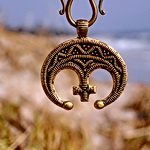 Here you can buy authentic replicas of Slavic pendants based on historical finds from the Viking Age, made of bronze or in real silver, perfect for your historical clothing. We offer Slavic disc amulets with filigree granulation decoration, true to detail replicas of crucifixes and cross pendants from the Viking Age, typical Lunula or Lunitsa charms and many other amulets. These replicas of Rus and Slavic pendants are a noble addition to authentic Viking and medieval re-enactment and are equally suitable as ambitious jewellery for everyday life.
Slavic amulets as witnesses to a turbulent era
Slavic amulets and pendants from the Viking Age, as documented in the Kievan Rus region and among the Western Slavs, offer a fascinating insight into a world where Eastern and Northern influences converged. When we look at these Slavic necklaces, such as the moon-shaped lunula amulets or the distinctive tryzub pendants, we see the connection between local tradition and supra-regional trade.
Slavic necklaces from the Viking Age are an expression of deeply rooted symbolism that gave the people of the Middle Ages a sense of protection and belonging. Our detailed replicas allow you to bring historical continuity back to life in your portrayal or everyday life. We have closely followed authentic models in our reconstruction to offer you a historically accurate experience, crafted from high-quality jewellery bronze, genuine silver-plated or 925 sterling silver.
Slavic symbolism: lunula, tryzub and kolovrat
The lunula amulet, which came in various sizes and designs, as shown by finds from Gnezdovo and Great Moravia, is considered a classic symbol of fertility and female power. In contrast to this are the Tryzub pendants, reminiscent of stylised falcons, which, as symbols of the Rurikid dynasty's rule, refer to the political power claims and identity of the Rus.
The Slavic Kolovrat amulet, with its striking sun wheel motif, draws on mythological ideas of Slavic paganism. Each of these forms, from simple crosses to the ornate Svantevit pendant from Wolin, is reproduced by us with a high degree of care in bronze or silver. You thus receive authentic testimonies to a jewellery culture that is both aesthetically and historically profound.
Craftsmanship: granulation and filigree work
What distinguishes Slavic pendants and amulets is their craftsmanship, especially in granulation and filigree decoration. The diverse granulated amulets of the Vikings, found in Birka or on Gotland, for example, reveal the high technical skill of the Slavic goldsmiths of the time and the significant trade activities between Slavs and Vikings.
In our replicas, we strive to bring the craftsmanship of Slavic artistry back to life. Whether it is the Rus cross or the fine ornaments on the moon pendants, craftsmanship and detailed reconstruction are the keys to authenticity for us. When you wear these pieces, you can feel the care and technological mastery that characterised Slavic jewellery craftsmanship.
Cultural networks: bridges between Rus, the West and the East
The diversity of our Slavic pendants and amulets reflects the connection between the Slavic and Scandinavian worlds in the early Middle Ages. These remarkable pieces of jewellery prove that the world of the Viking Age was by no means closed in on itself, but was characterised by lively exchange.
We see it as our task to preserve these bridges through our detailed replicas. For anyone interested in the material culture of the Slavs and Rus, our selection is an invitation to delve deeper into the connections of this vibrant cultural exchange. We offer you much more than just jewellery – we offer you an authentically designed window into the history of a Europe that was already interconnected at that time.


