


-
- Hauptmenü
- Schmuck
 Anhänger und Amulette
 Geschmiedete Anhänger
 Pilgerzeichen
 Fingerringe
 Armreifen
 Torques
 Ohrschmuck
 Leder-Armbänder
 Mittelalter-Perlen
 Wikinger-Perlenketten
 Wikinger-Halsketten
 Kettenzubehör
-
- Hauptmenü
- Gürtelzubehör
 Gürtelzubehör / Bein
 Gürtelzubehör / Eisen
 Gürtelriemen und Halter
 Gürtelzubehör / Bronze
 Gürtelzubehör / Zamak
 Ziernieten / Beschläge
-
- Hauptmenü
- Bastelbedarf
 Metall-Ringe
 Horn- und Knochen
 Taschen-Zubehör
 Lederbänder
 Schellen
 Ziernieten / Beschläge
 Lederschuppen


Die Schönheit historischen Wikingerschmucks
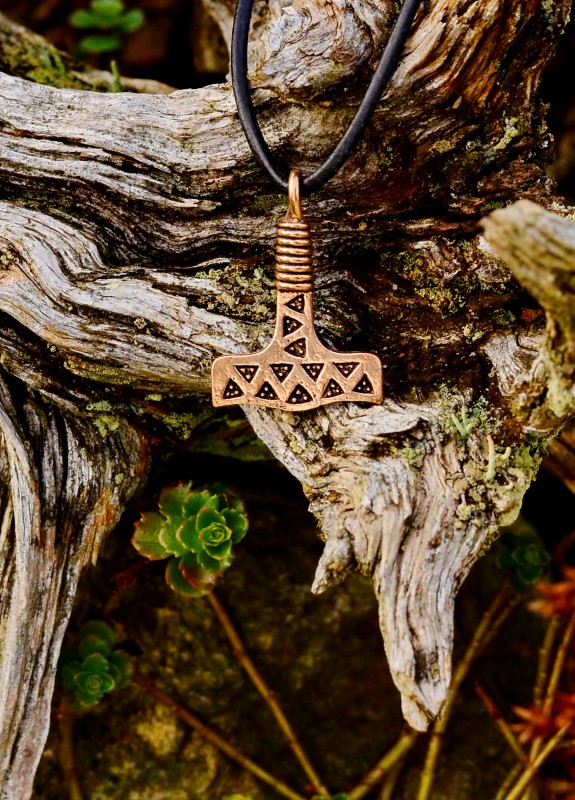
Hier findet ihr einzigartige Bilder historischer Schmuck-Repliken aus der Zeit der Wikinger, wie Fibeln, Broschen, Amulette, Armringe, Ohrringe und Torques aus dem Groß- und Einzelhandels-Sortiment auf www.peraperis.com.Thors Hammer from Falster...
Viking time Thor's Hammer replica from the silver treasure trove of Falster / Vålse in Danmark.
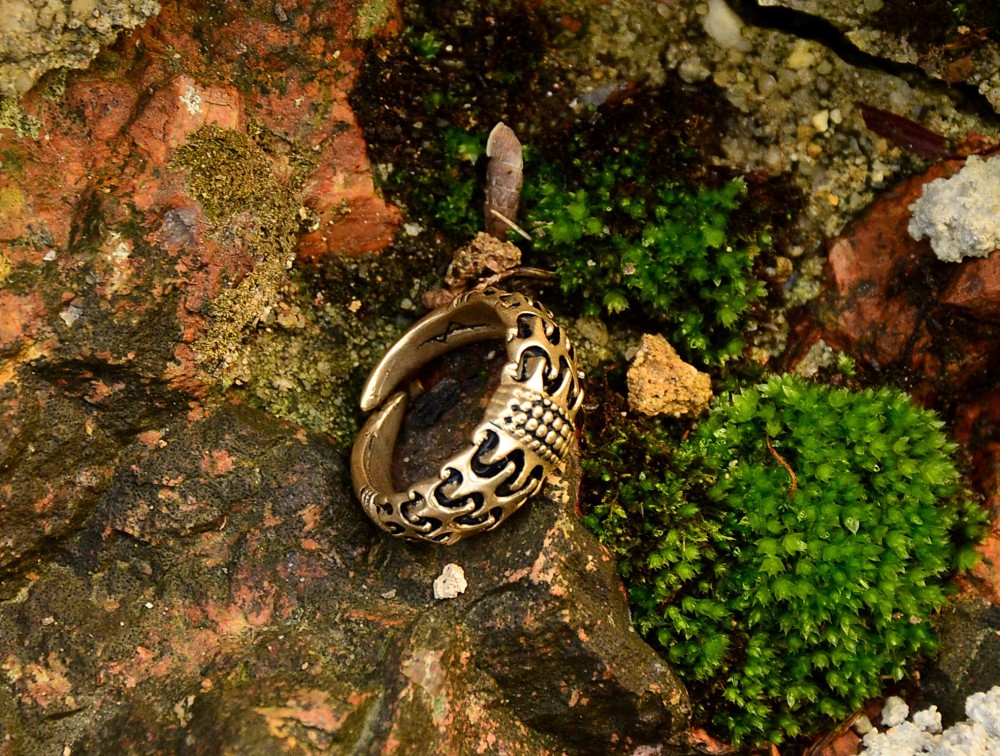
The model for this Viking Ring was a so-called warrior bangle, once made of solid silver, and is exhibited today in the Danish National Museum in Copenhagen.
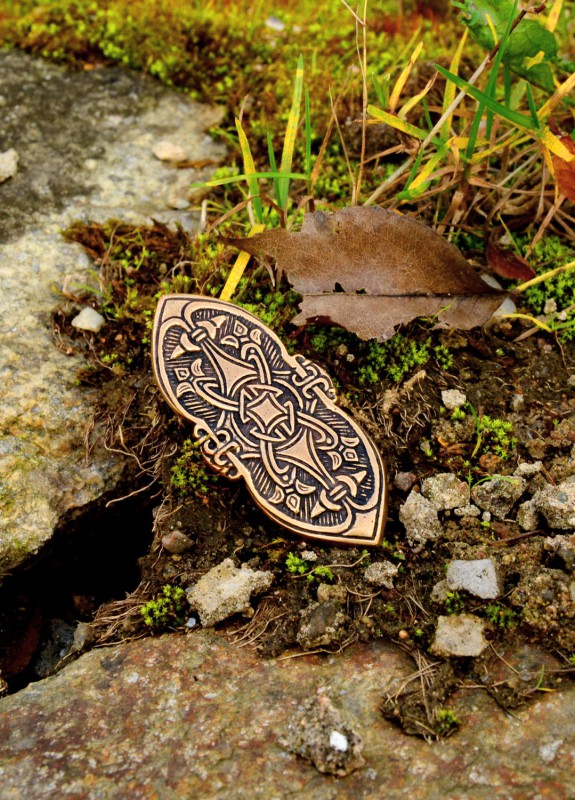
Viking Brooch Replica from Björkö...
Brooch from Björkö for the female costume of the Viking period from the 10th century. The original of this brooch has been found in the Swedish Viking settlement Björkö, located in the Lake Mälaren near Stockholm.
The original of this Viking Age brooch was made of pure bronze and was found in the black earth of the Viking settlement Björkö. The brooch was published by Jan Petersen in the famous book Vikingetid smykker, 1928. The type of this brooch is very rare and unique in the Viking Age and might have magyar roots.
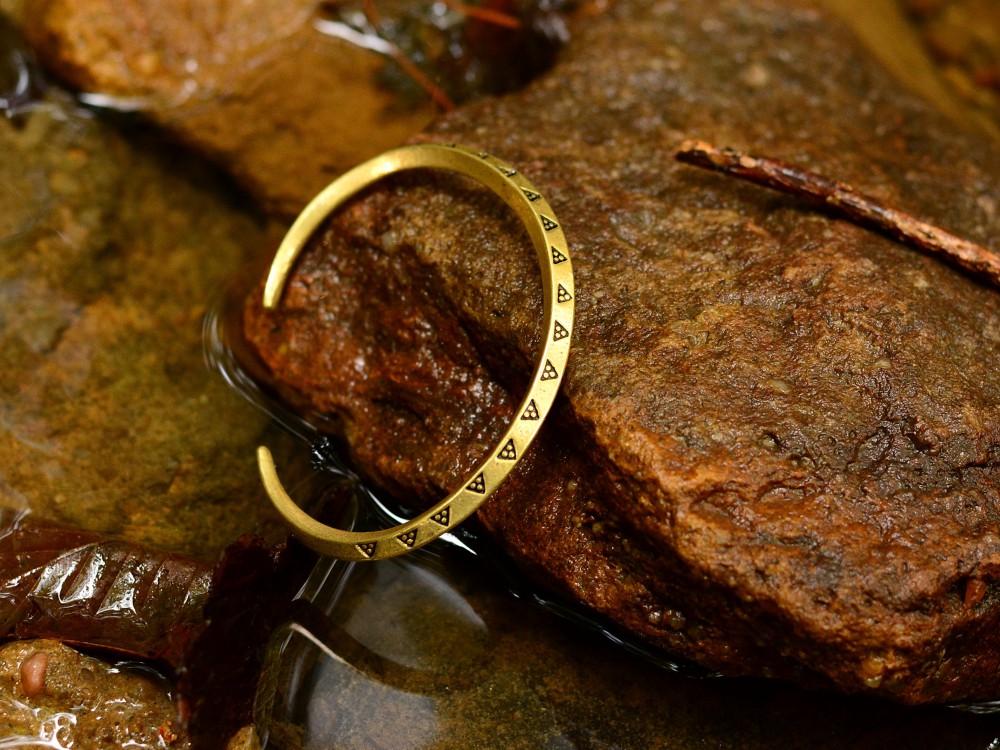
Viking Money Bracelet from Skaill...
This replica of a Viking arm ring ris made according to the famous treassure hoard from Skaill on the Orkney Isle and dated to the Viking period around 800 to 1000 AD.
In the Viking Age, such a bracelet was worn by both women as men and used as needed as cash - hence the term originates Money bracelet. The Viking trader just broke as needed a larger or smaller piece from that bracelet to pay.
In 1858, a young boy was digging in the bay of Skaill and found a few pieces of silver lying in the earth. In the end they were unearthed more than one hundred items and thus the largest Viking treasure trove of Scotland was found.
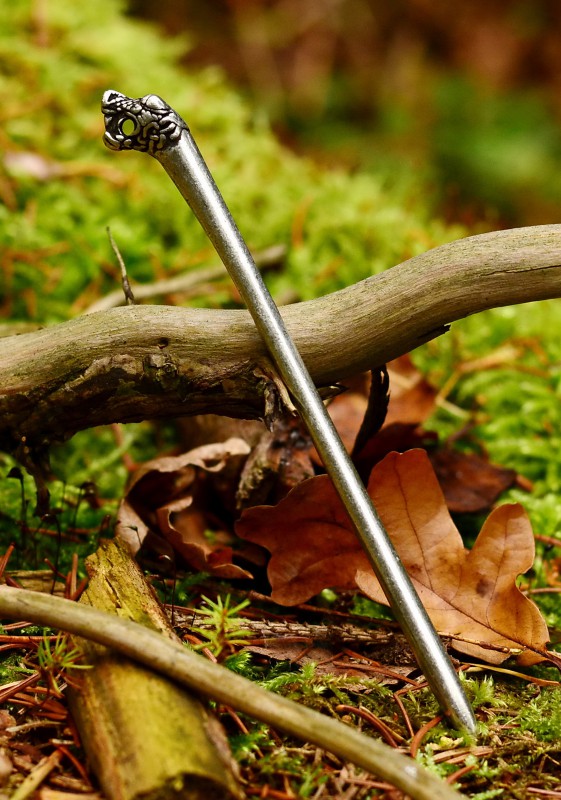
Oseberg-Hairpin
This hairpin in the style of the Viking time was inspired by the dragon head from Oseberg.
This expressive hairpin is inspired by the dragon head from the famous Viking ship burial from Oseberg.
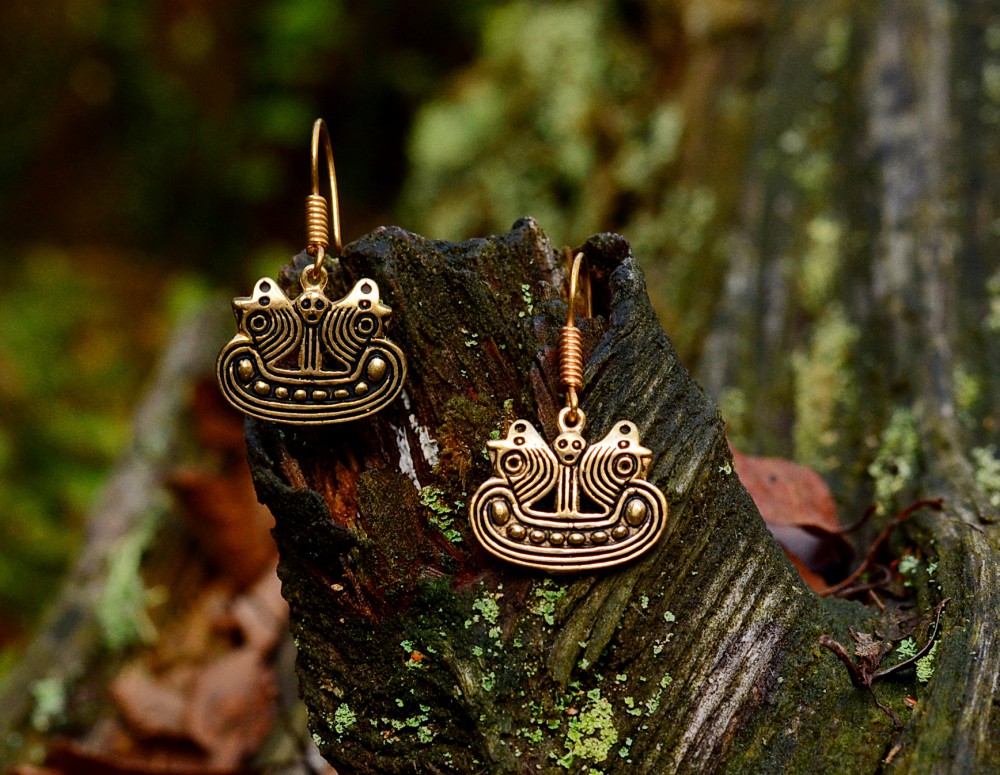
Viking Ship Earring Bornholm...
These expressive Viking ship Earrings are made according to a historical find of the Viking period from the villag Lillevang on the island of Bornholm in Denmark.
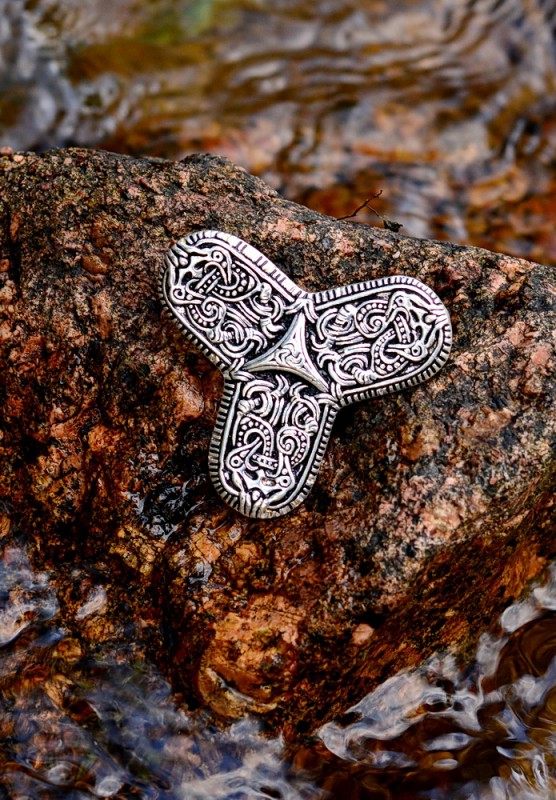
Trefoil Brooch from Tranby...
This beautiful Viking jewelery is made along the lines of the trefoil brooch of Tranby which was found in Buskerud / Norway and dates back to the 10th century.The trefoil brooch from Tranby is a remarkable example of viking jewelery and represents a transition between Borre style and Jelling Stylel.
The original Viking brooch measures 8 cm, the copy is smaller in only 5 cm diameter.
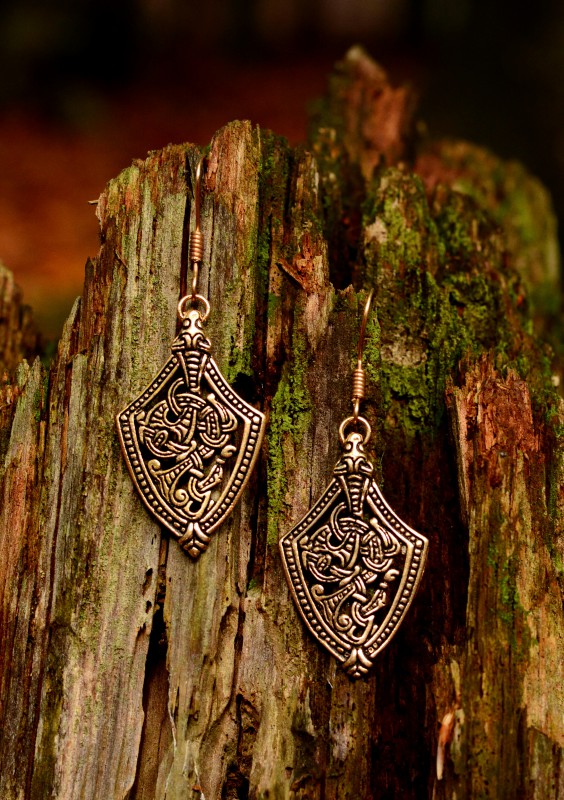
Earrings in Viking sword chape design...
The detailed crafted Viking earring in shape of a historical sword chape is inspired by a historical sample in so-called borre style of the Viking time.
The Viking jewelry display a gripping beast which was typical for the Viking art.
Chapes were used to protect the end of the Viking sword.
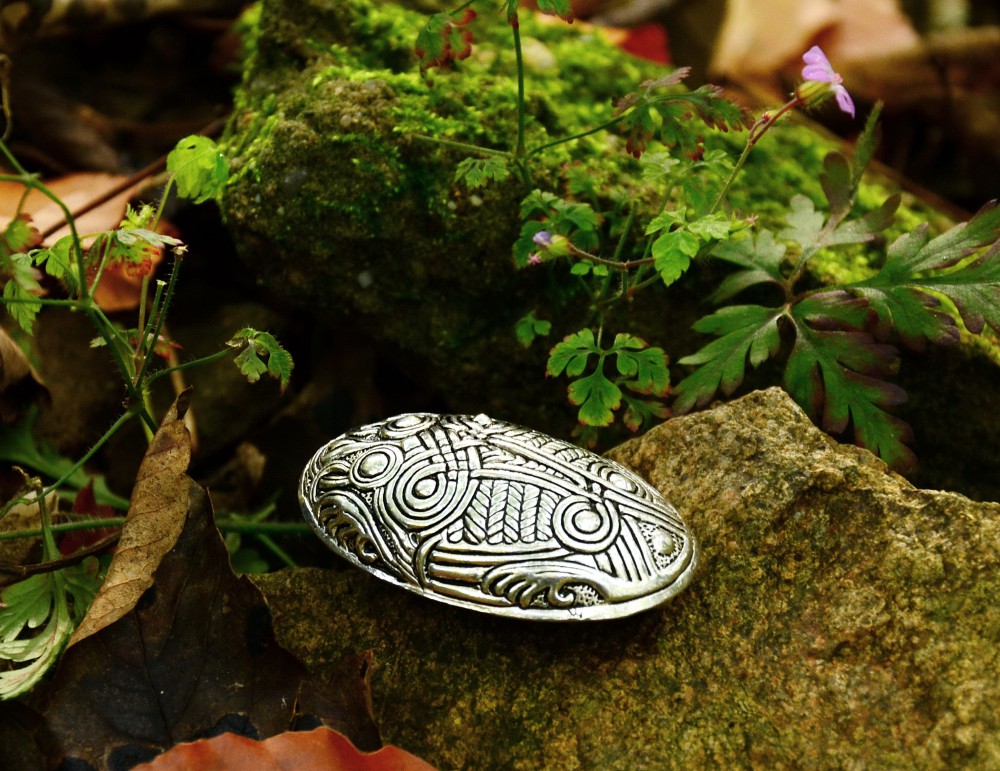
Viking turtle brooch...
This beautiful Viking tortoise brooch is based on a historical model from Norway. Very similar oval brooches are also known from Oldenburg and Bornholm.
The tortoise brooch, also known as turtle or oval brooch was widespread in the Viking time throughout Scandinavia and the Viking settlements in England and Russia.
Between 600 and 1000 AD such brooches were a fundamental part of women's costume in Northern Europe and were found in large amount in the women's graves of the Viking period.
Frequently one or more chains were fixed between these fibulas and sometimes fastened in the center of the chest with an aditional round brooch or a trefoil brooch.
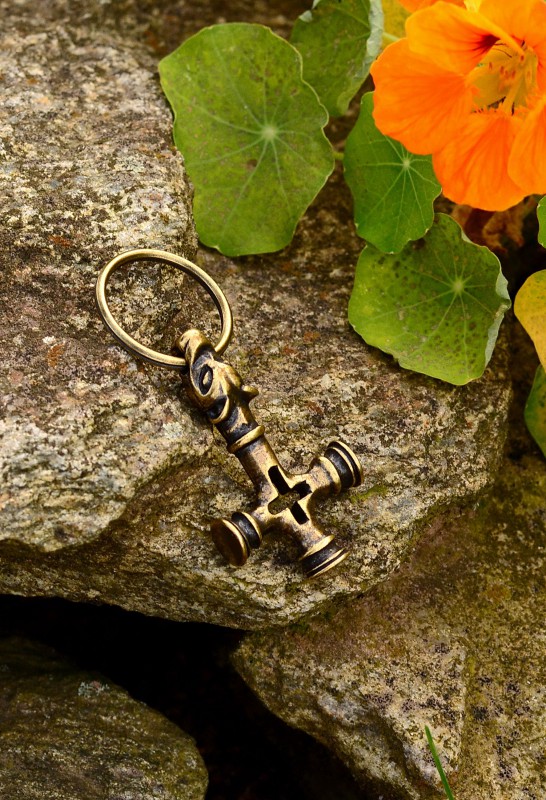
Key ring holder with Wolf's cross Mjoelnir...
A key ring holder in the shape of the famouse Viking Wolf Cross Thor Hammer according to the famous Mjolnir of Fossi on Iceland which dated to the 10th century.This Viking Thor Hammer combines pagan and Christian symbolism into a harmonious whole by the combination of cross and wolf head.
The Vikings called the Thor Hammer also Mjolnir. The Thor Hammer was the war hammer of the Norse god Thor. In the 9th and 10th century . the Thor Hammer was widely used as a counterpart to the Christian cross in order to distance themselves from the christs.
Viking inspired earrings in Urnes Style...
The design of these Viking style earrings was made according to historical examples from the late Viking period in so called Urnes style which was typical for the art in the end of the Viking age in the 11th century.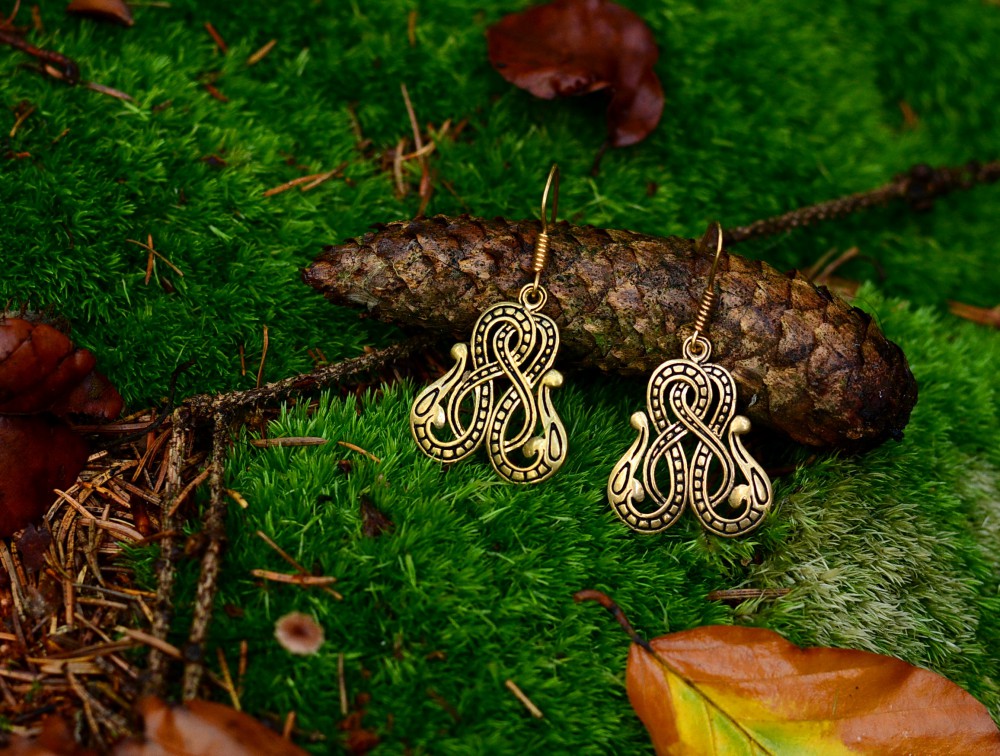
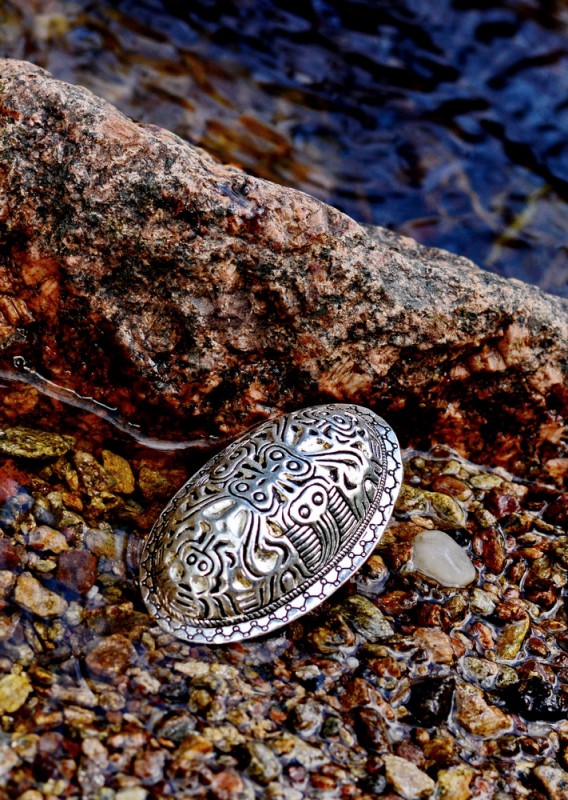
Viking Oval Brooch Replica...
Oval brooch replica of the Viking period based on an original from Karelia / Finland.
The in Jelling style.
This beautiful Viking jewelry dates to the 9th century and is typical for the Viking womans dress to fix the apron on the left and right shoulder. Oval brooches were worn from the early Vendel-period during the whole Viking age from 500 until 1100 AD.
Viking disc brooch replica...
This beautifully Viking Jewellery is known as disc brooch and is made on base to an original find from the Viking period of the 10th Century AD from Finland.Particular attention should be given to the four animal heads on the ends of the cross, bearing the fibula. Together with the snake-like plaits the fusion of pagan and Christian elements in the art of the Vikings is well shown in this example of viking age art work.
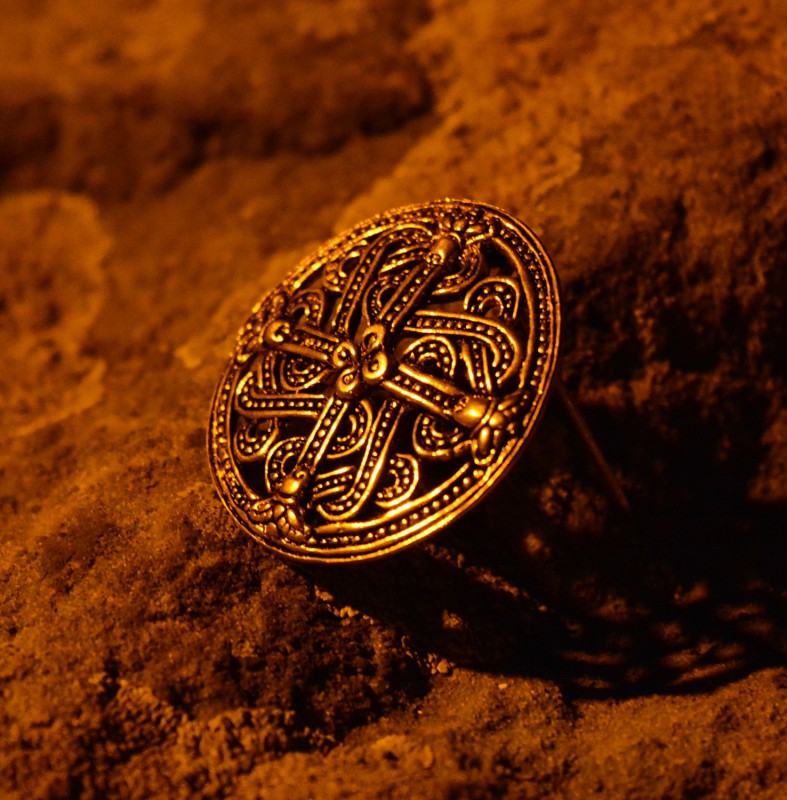
Viking Trefoil Brooch Replica...
A beautiful replica of a trefoil brooch due to a historical model of the Viking Age based on a finding from Värnamo in Småland / Sweden.
The trefoil brooch is made of bronze and has a diameter of 5.8 cm. On the back of the brooch there is attached a small loop for fixing chains.The trefoil brooch was worn centered on the Viking woman's dress or used to close lighter capes.
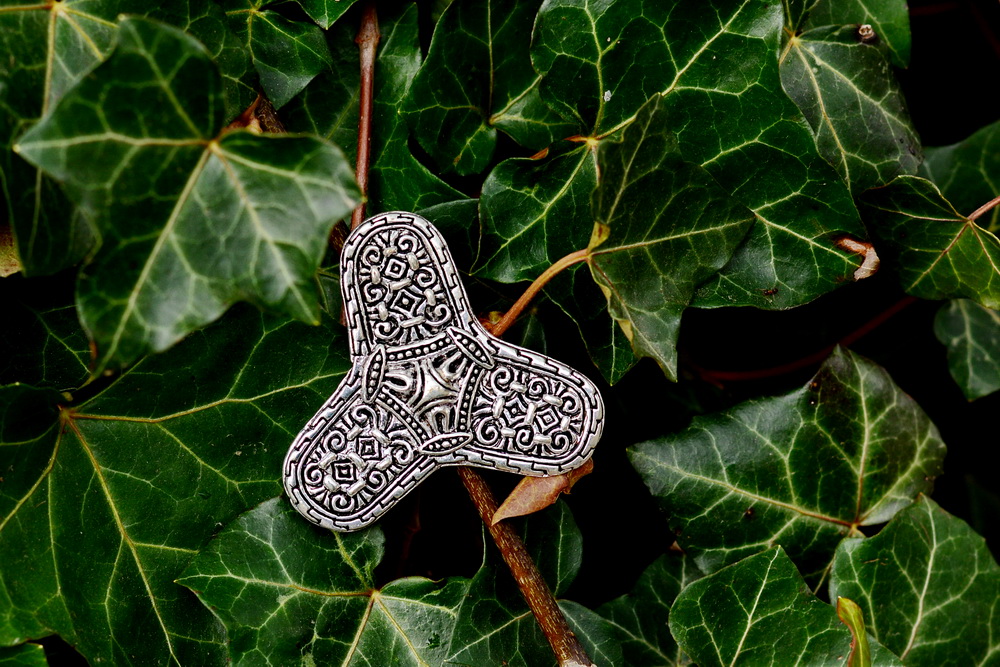
Viking style Bangle...
A beautiful bangle inspired by historical irish motivs as they were used in the early Viking age between 800 and 900 AD.
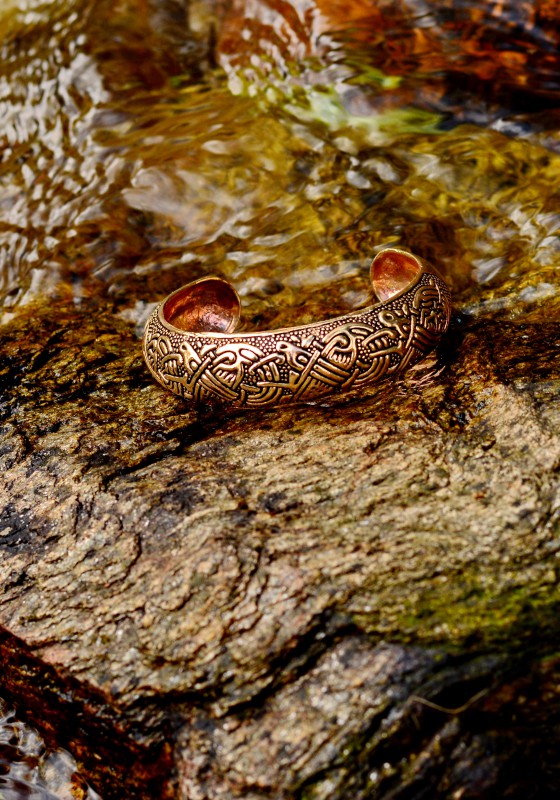
Sutton Hoo Brooch...
This beautiful Anglo-Saxon brooch is made after a harness mount which was found in the ship burial of Sutton Hoo in East Anglia which dates to the anglo saxon period arround 650 AD.
Today it's believed that this burial owns to the anglo saxon ruler Raedwald of East Anglia († 617-625), although this is not completely certain.
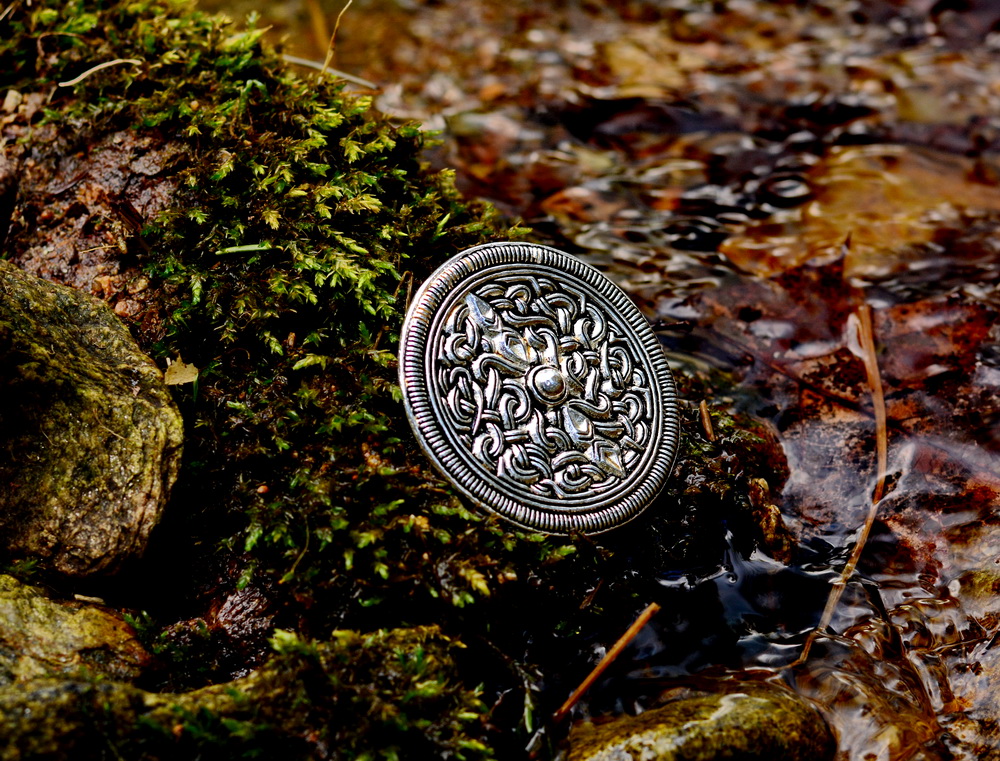
Pitney Brooch Replica...
This filigree brooch is a faithful replica of the so-called Pitney brooch, an Anglo-Saxon brooch of the Viking era in Urnes style.
The original of this impressive Viking jewellery was found in the English town of Pitney in the county of Somerset. The Pitney brooch dated to the period from 1050 to 1100 and is exhibited today in the British Museum in London.
The Pitney Brooche shows two fighting snakes. This motif probably symbolizes the eternal struggle between the forces of good and evil, as it was often discussed in the Viking period.
The Pitney-Brooch represents a connection of two styles of art, because the subject of the snake on the Pitney brooch is a of part the Viking art, while the shell edge and the beaded snake line are Anglo-Saxon characteristics.
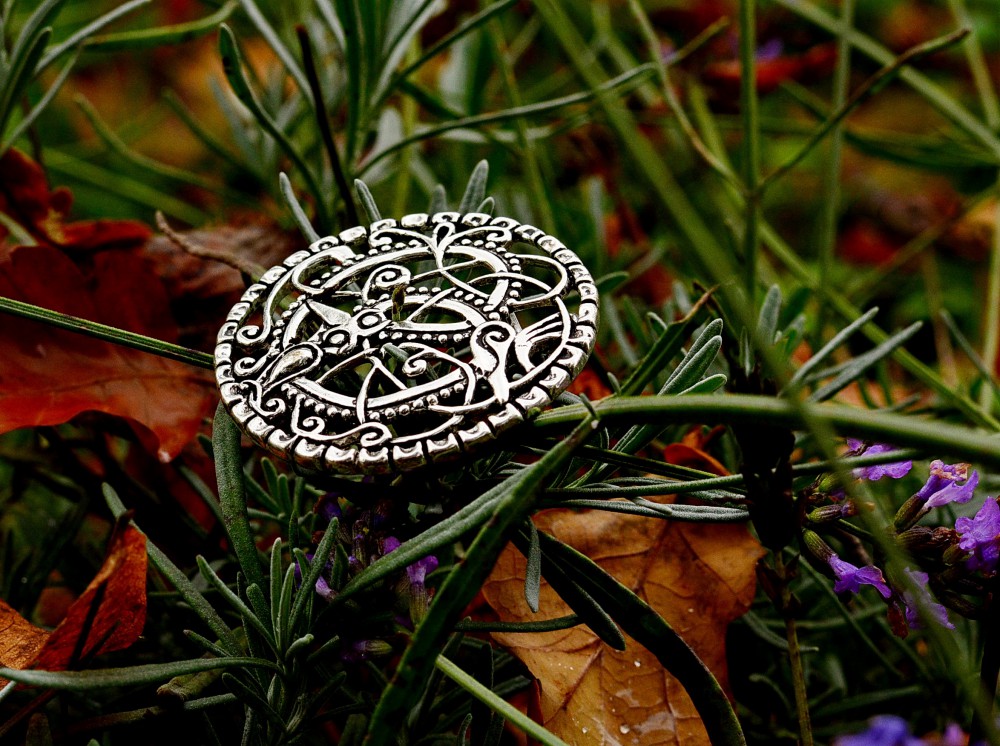
Ancient Skandinavian Armring...
Beautiful replica of an iron age snake bangle of the teutons from the 3rd century AD, thus tThe snake bangle is temporally associated with the Germanic Iron Age, according to the Danish original finding of Himlingøje on Zealand.
The original Germanic serpent bangle is now exhibited in the Danish National Museum in Copenhagen.
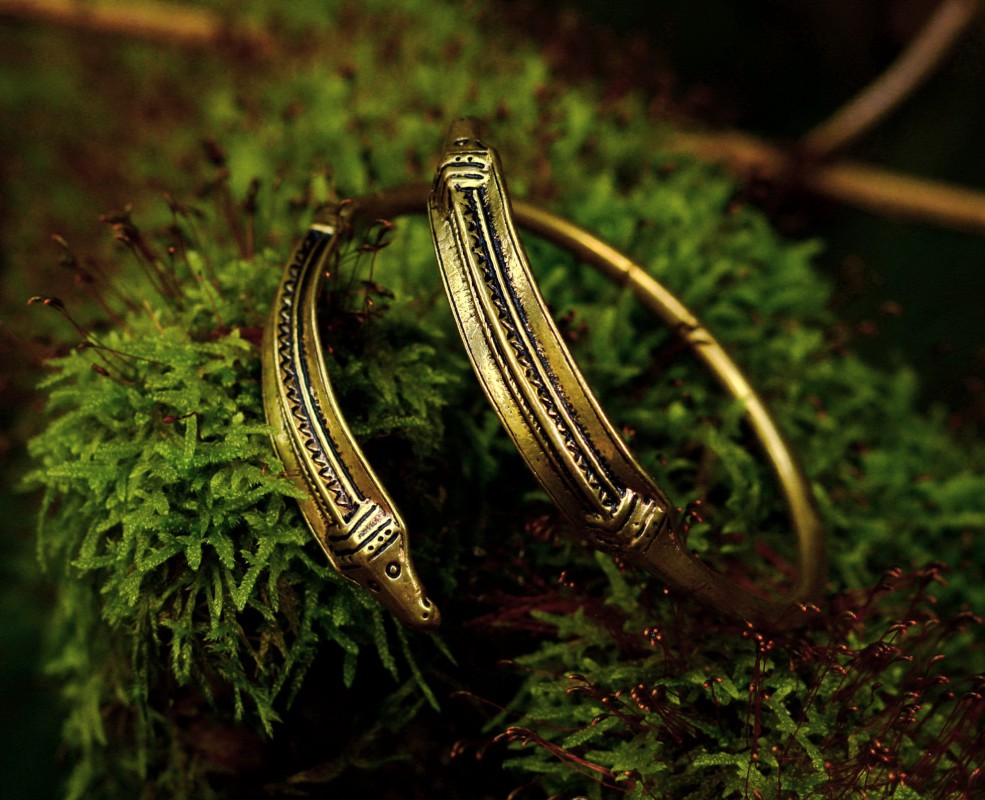
Trollaskogur Brooch...
A beautiful brooch on base on the original Viking Brooch from Trollaskogur on Iceland.
The large urnes style brooch is a superbly crafted replica of an original find from the 11th century. The Trollaskogur Brooch is a large animal brooch with a curved neck and beautiful open worked body.
The Trollaskogur brooch is a magnificent example of Viking jewelery in the animal style of the late Viking Age, which is named to the famous stave church from Urnes in Norway. Brooches in the style of the Trollaskogur Brooch are known from several places in different versions.
The Trollaskogur Brooch shows, as well as many other brooches in the Viking urnes style, a big animal in fight with a snake, which is generally understood as an early Christian symbol for the struggle between good and evil.
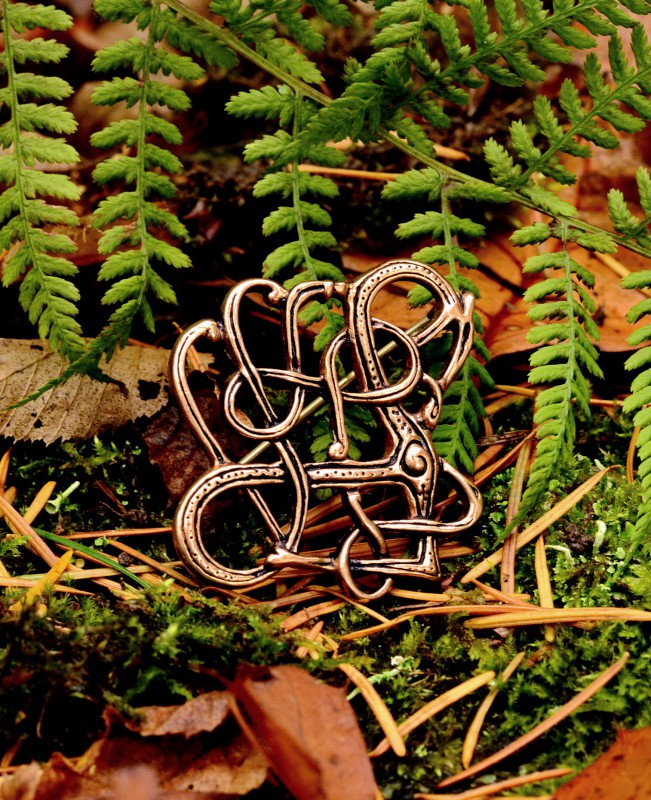
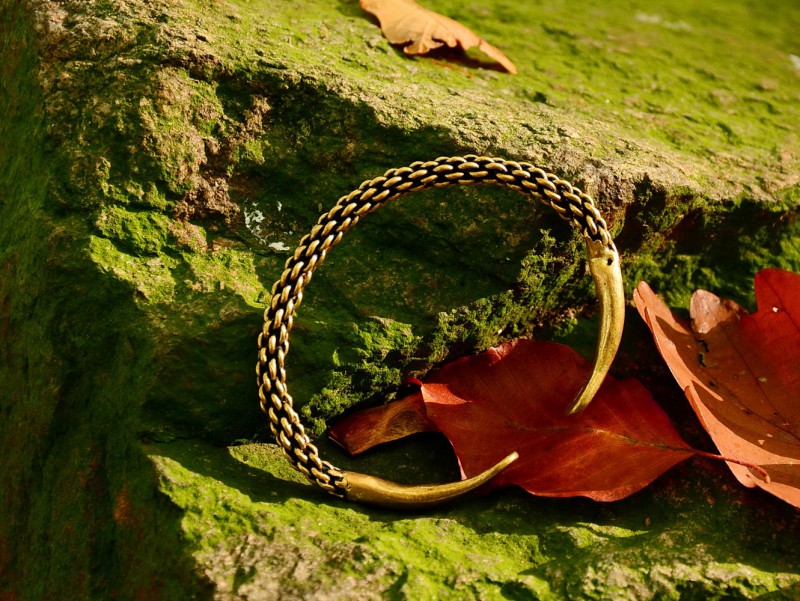
Braided Viking Armring replic
 a
a
Lindholm Hoeje Viking Brooch...
A delicately crafted Brooch on base of the famous Viking brooch from the discovery of Lindholm Hoeje near Aalborg in Denmark.The brooch from Lindholm Hoeje is a good example of the animal style of the late Viking Age, the so-called Urnes style.
The burial ground at Lindholm Hoeje is located in the north of Jutland in Denmark and has been used since the 4th century AD. With over 700 graves Lindholm Hoeje is considered by far the largest viking grave-time course in Denmark and is especially noticeable by about 250 up to 10 meters long stone settings in the form of Viking ships on. The Brooch from Lindholm Hoeje itself was located in the black earth of a nearby village, whose inhabitants probably had found their final resting on that Viking Cemetery.
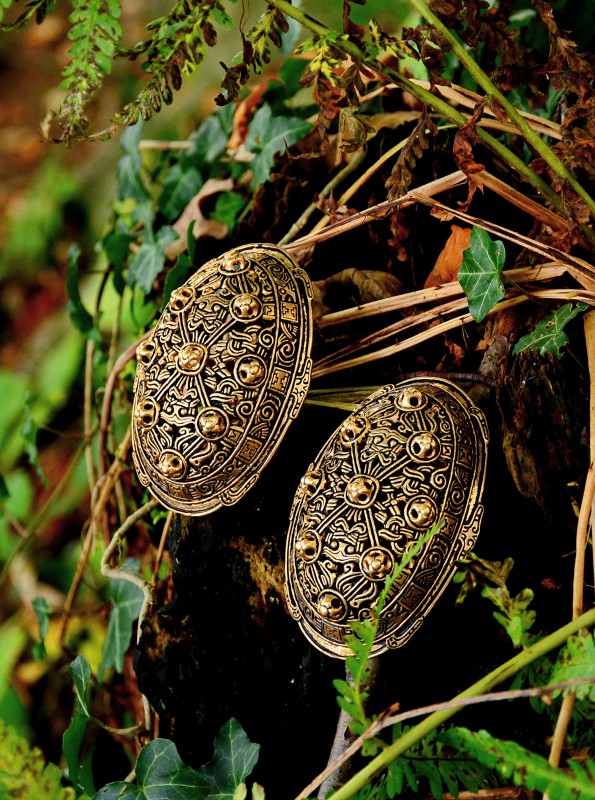
Viking Oval Brooch Replica...
This Oval Fibula of the Viking Age is an fine detailed replica of a historic original discovery of the 10th century.
The historical model for the replica of this expressive oval brooch is taken from the exhibition at the British Museum in London and is named fibula of type P 51, according to the classification of the archaeologist Jan Petersen.
This type of tortoise brooch was very widespread in the 10th century and particularly often represented in western Norway.
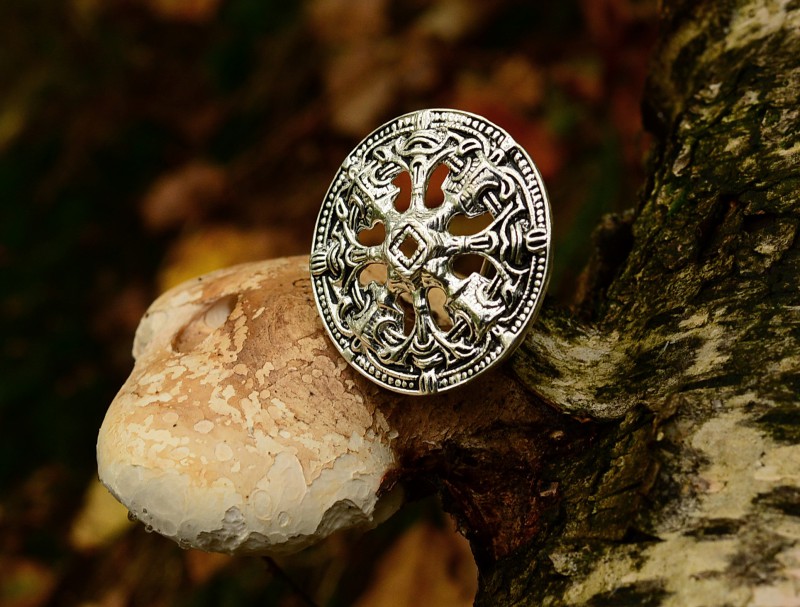
Viking disc brooch replica from Norway...
This beautiful Replica of a Viking disc brooch was made according to a historical original which was found in Norway and publicated in the book "Vikingetidens Smykker" (1928) from Jan Petersen.
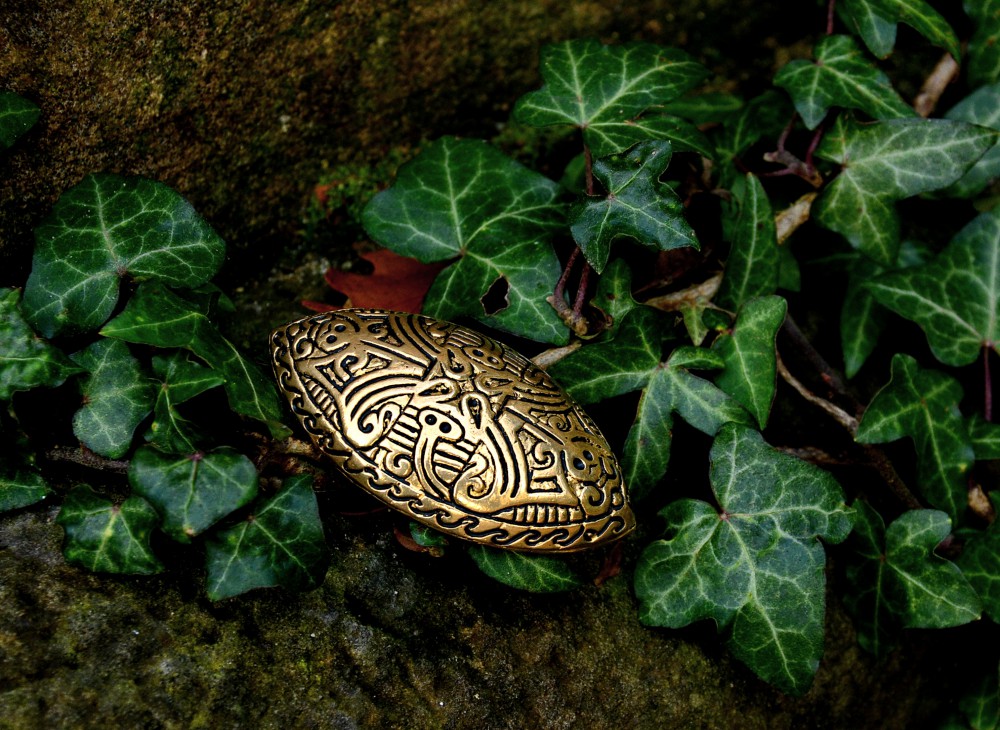
Viking Oval Fibula from Finland...
This typ of pointy oval brooch is very typical for the Viking age in Finland and the baltic area and was worn in pairs on the womans atire to fix the apron.
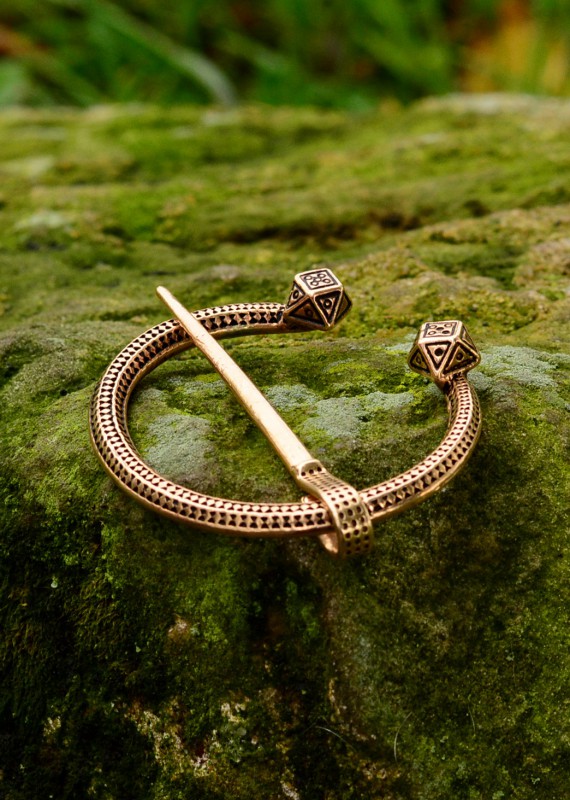
Viking polyhedron peannular brooch...
This impressive replica of a polyhedron peannular brooch, also called ring fibula, Omega or Horseshoe brooch, is manufactured according to an original find from Finland.
This typ of peannular ring brooch was spread mainly during the Viking period in the Baltic region between the 9th and the 11th century.
Horseshoe brooches of this type are known from various localities as from Papinsaari / Finland, Vindelgransele / Sweden, Hedeby / Germany and Lake Ladoga / Russia.
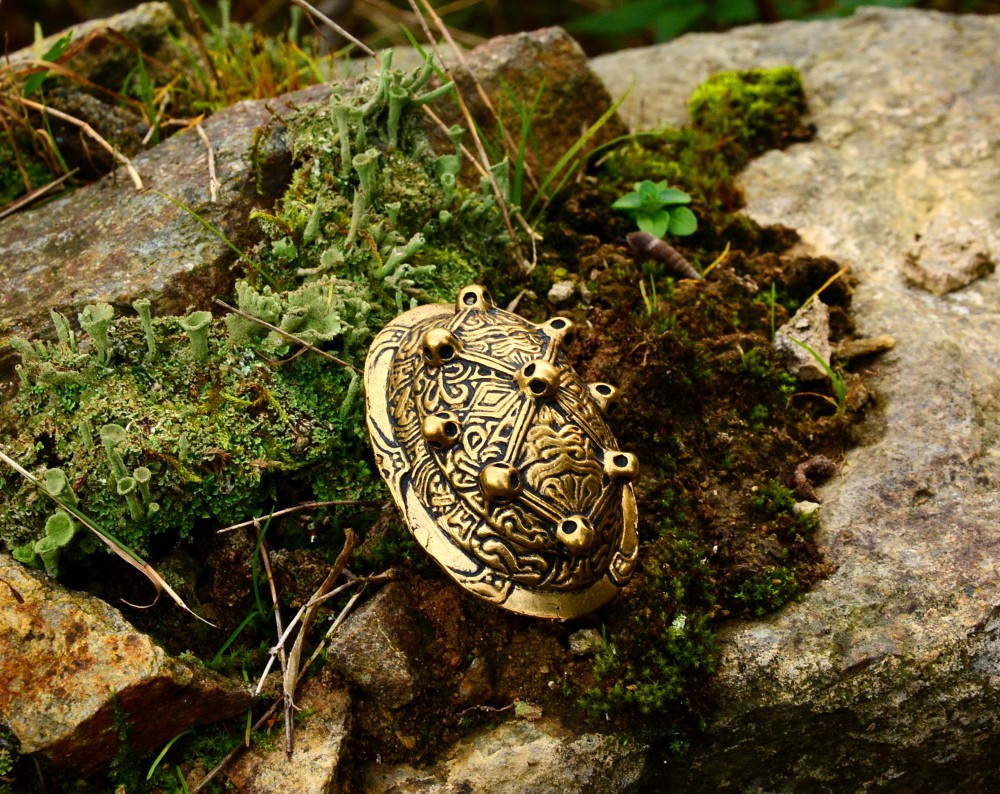
Viking Tortoise Brooch Replica...
During the period 700 and 1100 AD such oval brooches were a typical component of the Nordic women's costume and found himself frequently as an addition to the women's graves of the Viking period.
The Oval brooch is the most common type of fibula in Northern Europe during the Viking period and is found throughout the archaeological material from Ireland to the Volga.
In addition to the frequent, cheaper mass-produced and poorly cast copies, there were found also extremely filigree oval brooches that could be made of precious silver and even gold.
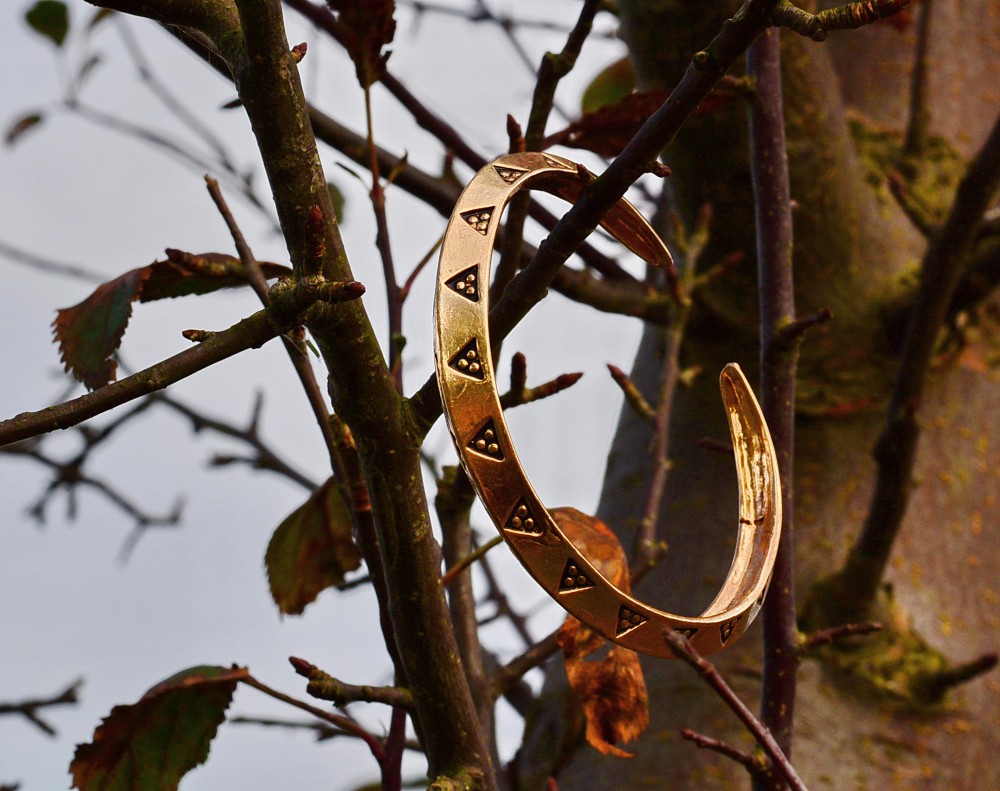
Viking Bangle...
This massive viking bangle is made according to a historical model from the Skaill / Orkneys and dated to the period around 800 to 1000 AD..In the year 1858, a boy named David Linklater was digging in the bay of Skaill on the Orkney Isle whe he found a few pieces of silver lying in the earth. Soon he was joined by a number of folk and together they unearthed over one hundred items and thus the largest Viking treasure trove found so far in Scotland.
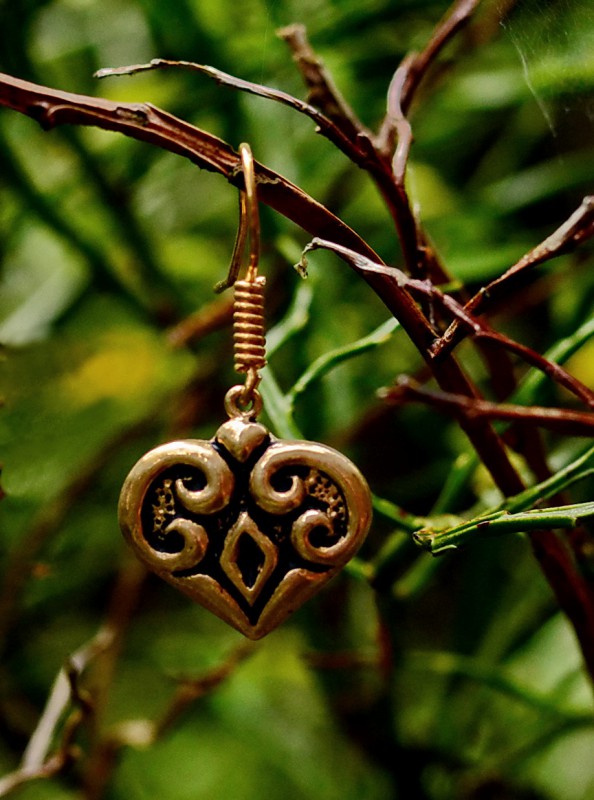
Magyar viking Earring from Chernigov...
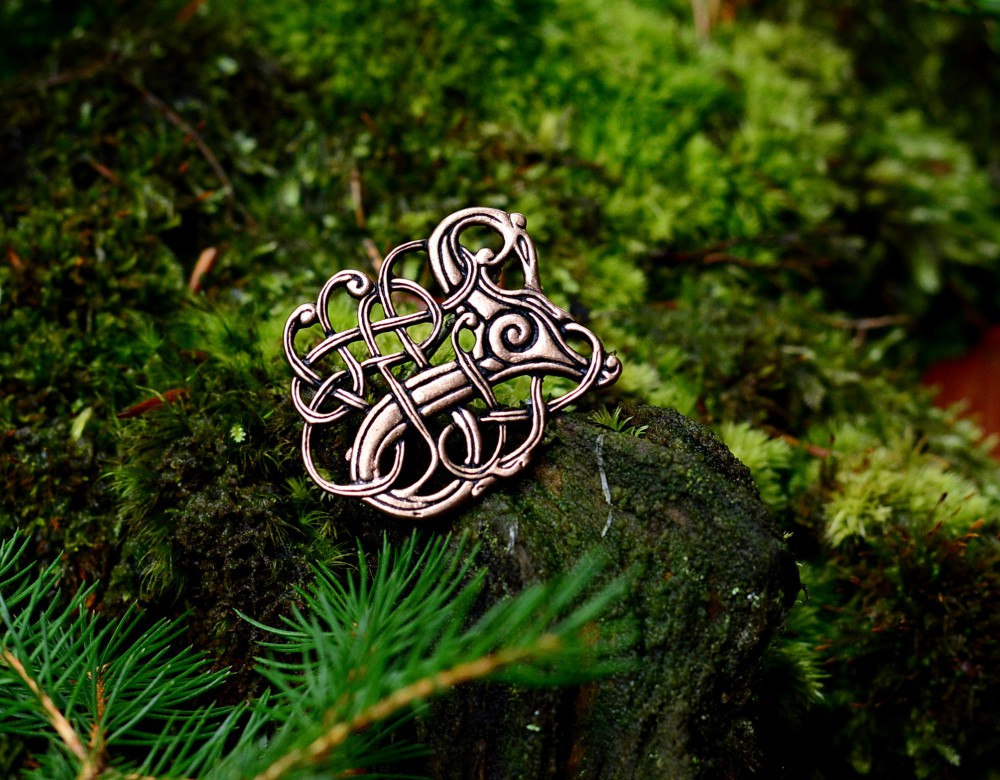
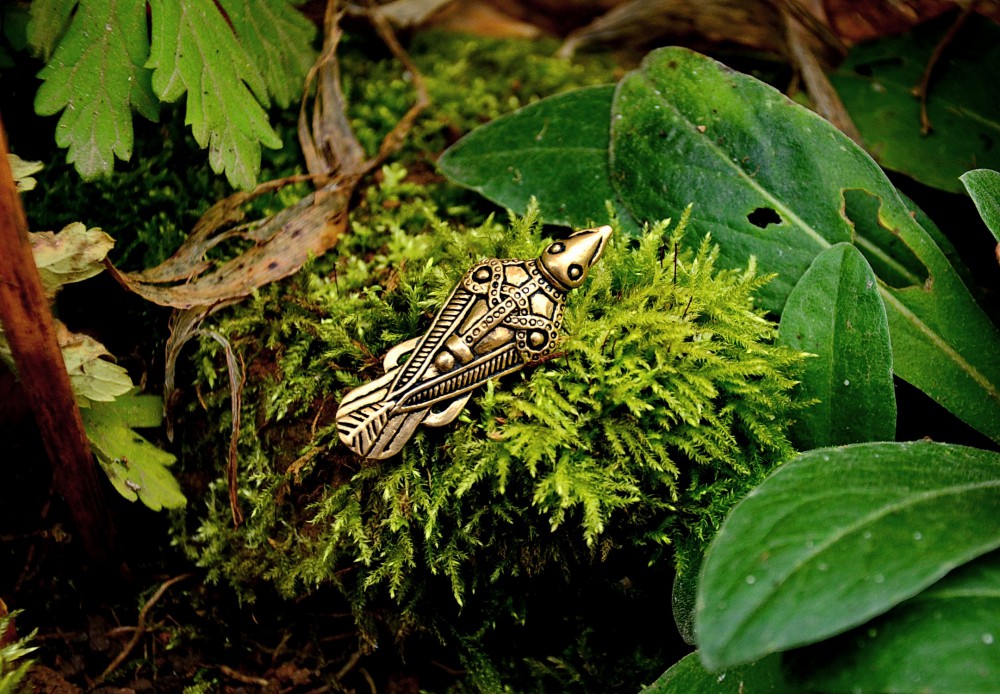
Bird Brooch Replica from Uppåkra...
This detailed replica of an Iron Age bird brooch was made according to the original find from the southern Swedish settlement Uppåkra.The bird brooch probably represents a raven, which have often been discussed in the Iron Age and Viking Age in art and jewelry as a companion of the god Odin.
Uppåkra is located near Lund in Scania and has been inhabited since the Stone Age, later it became the largest Iron Age settlement in southern Sweden. Uppåkra had its heyday between 400 and 1050 AD. Uppåkra seems to have been a political, economic and religious center and was believed to be the royal residence of an early kingdom in Skåne.
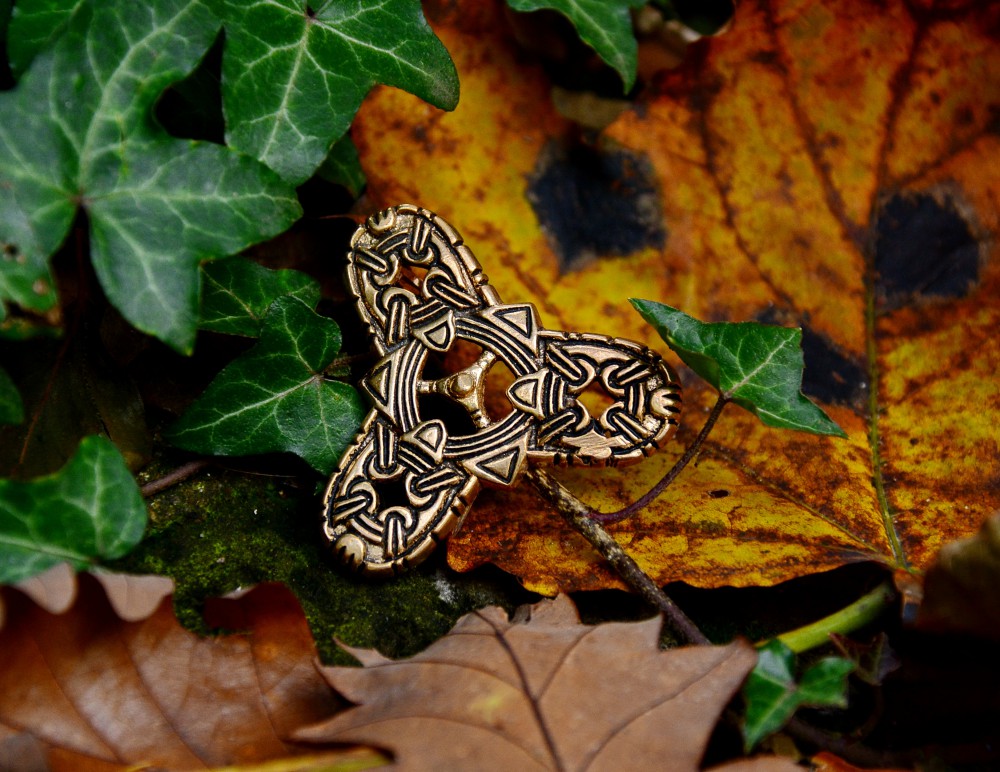
Viking Trefoil Brooch from Smolensk...
As a part of frankish baldrics such trefoil mounts served as a strap divider. The Vikings turned these mounts into jewelery and made brooches by his own Scandinavian taste. Thus the trefoil brooch became a typical part of the Vikings female costume and was very often found in women's graves of the Viking age towards the middle of the 10th century. The trefoil brooch was mostly centered on the chest between the oval brooches.
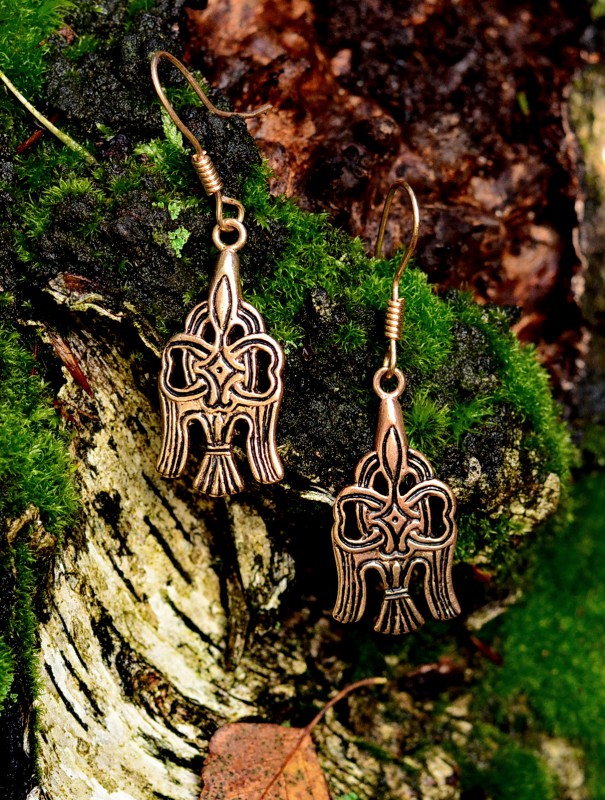
Earring Viking Raven from Jaroslav...
A Pair of Viking earrings with raven motif from a historical model of the Viking Age.
The filigree Viking Age jewellery in the shape of ravens is made according to an historical find from Jaroslav in Russia dates back to the 10th century.
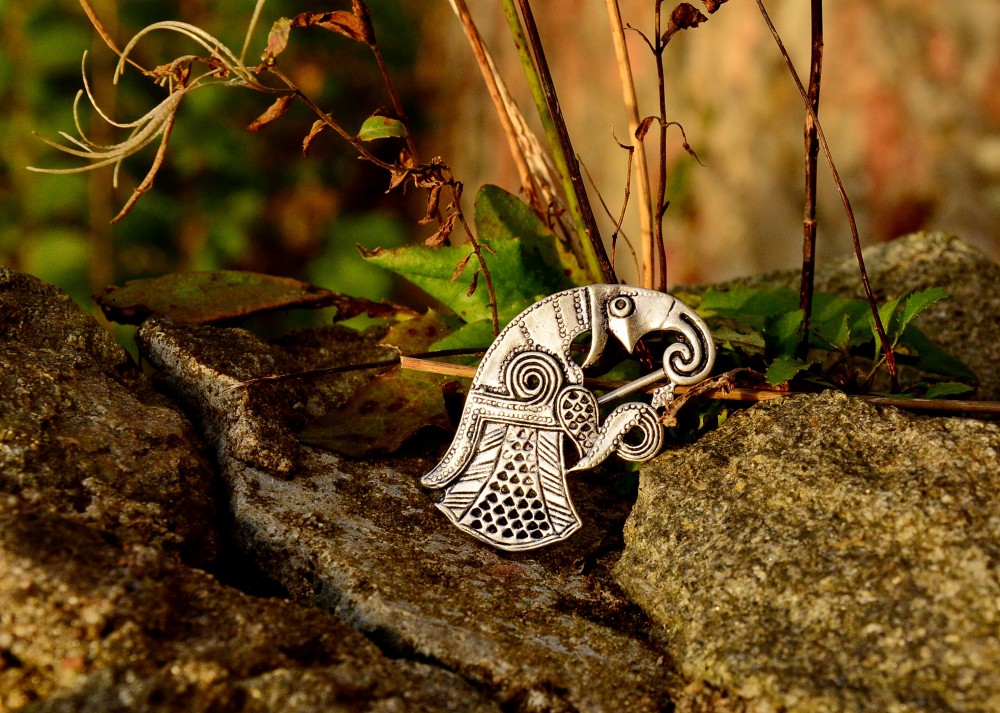
Viking Vendel Raven Bird Brooch replica from Gotland...
This Raven brooch was made according to an original find of harness mounts from Gotland in Sweden and dated to about 600 n. Chr. Thus the bird brooches belong to the Vendel era that preceded the Viking period immediately. Such bird representations can be found very often in this era and were widespread in the Germanic area.
Today the originals of these bird mounts are exhibited in the Statens Historiska Museum in Stockholm.
The Raven brooch was once used on the shoulders in a pair to close the Germanic Women's robe, the so-called peplos.
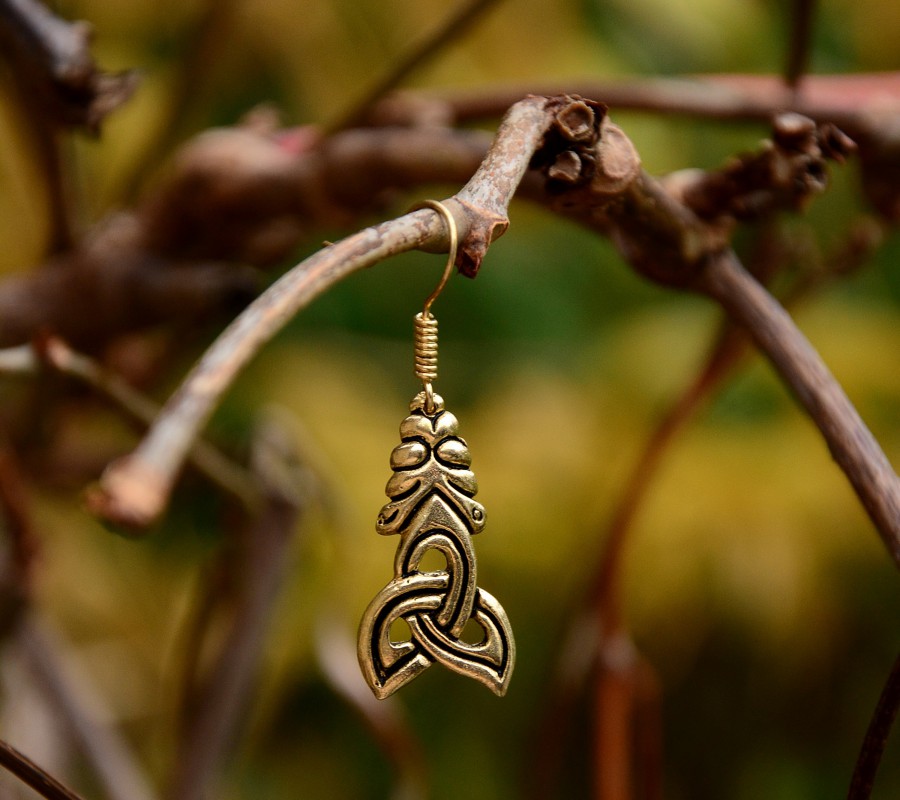
Viking Age Earring...
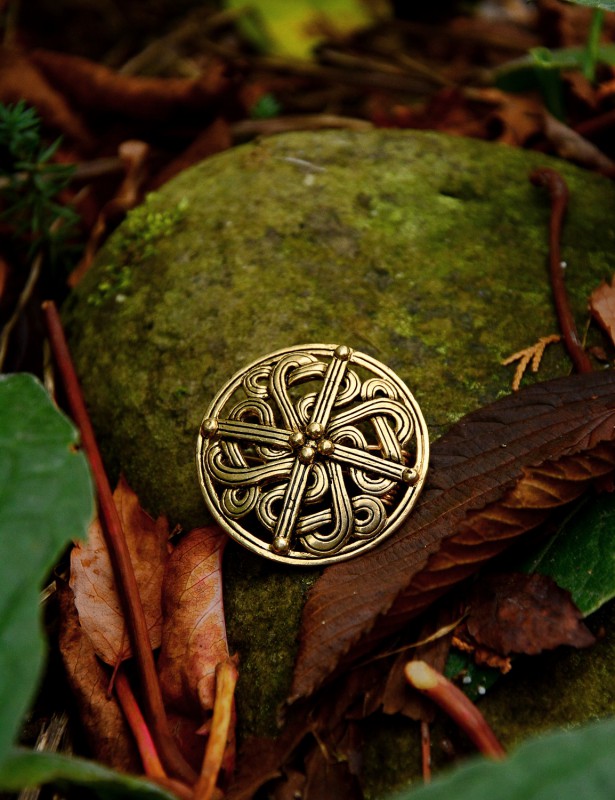
Viking disc brooch replica from Finland...
Replica of a Viking disc brooch in Borre style according to an original find of the Viking period from Finland, dated to the 10th century AD.
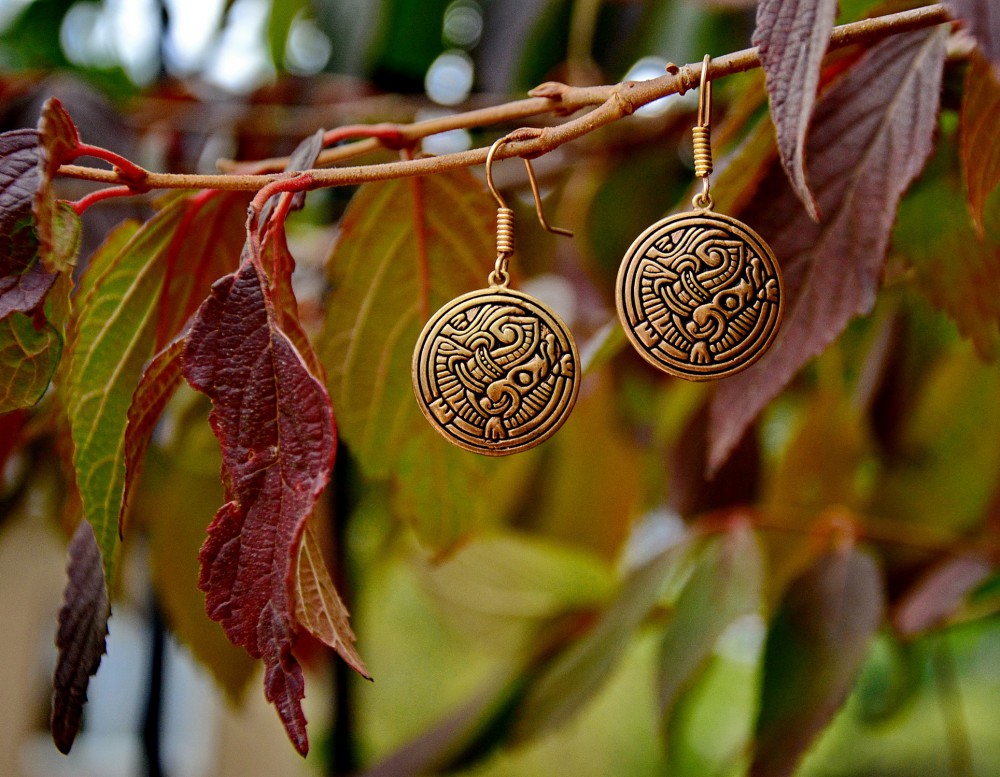
Viking Earrings with gripping beast...
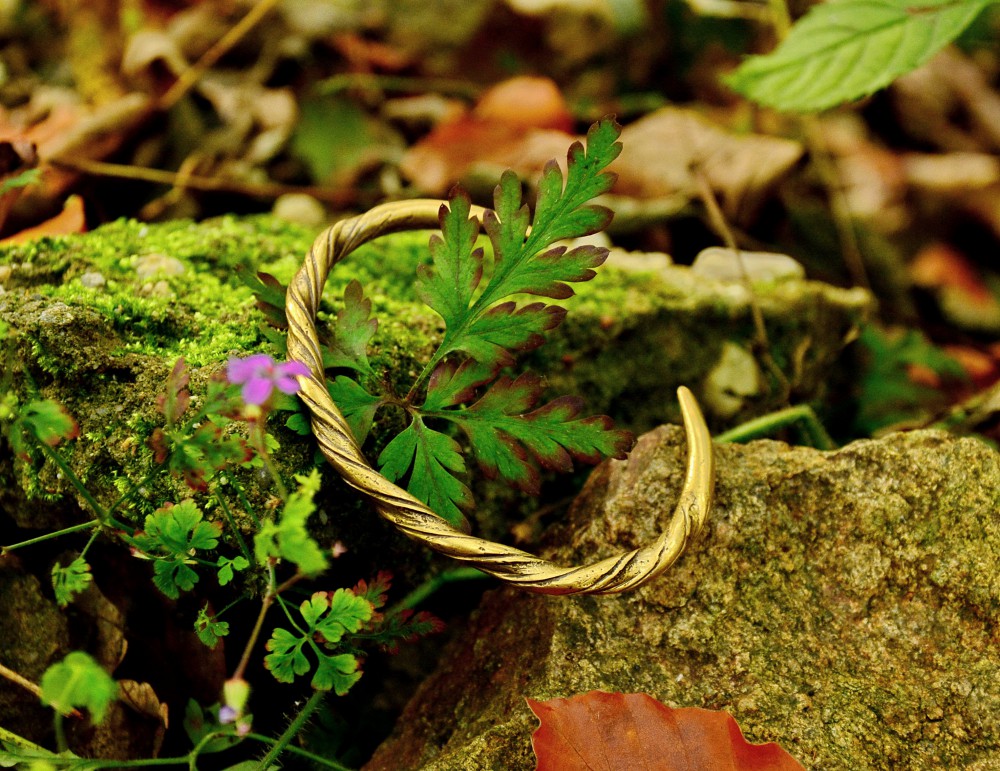
Twisted Viking Bracelet...
This beautiful replica of a twisted Viking bracelet is made according to historical models from the Viking Age. Such bracelets were widespread over a millennium in Scandinavia.
In the Viking Age, both woman and man, were adorned with such bracelets and used them for representation and payment.
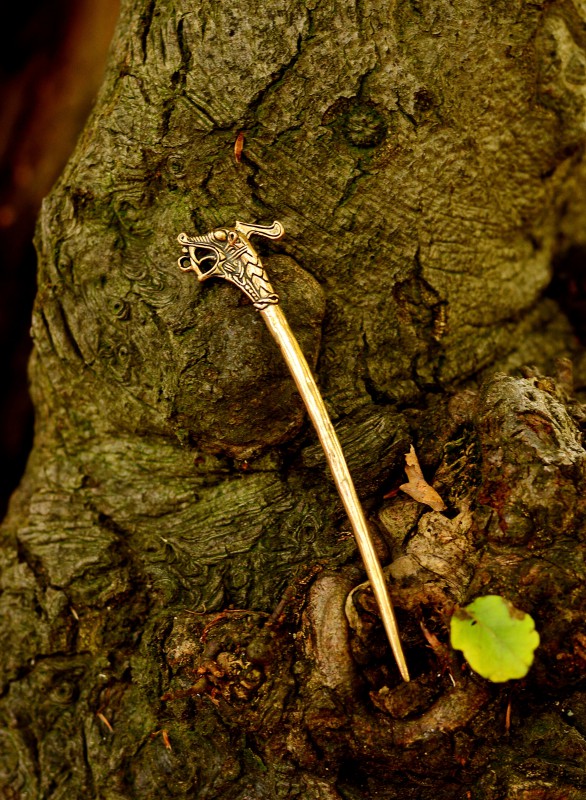
Hedeby Dragon head pin...
Replica of the famous cloak pin with dragon head from the Viking city of Hedeby.
Dress pins like these beautiful replica from a historical find from Hedeby were widespread in the Viking period to close the cape and were a good alternative to the usual fibula.
The original of this Viking dragon head dress pin dates from the 10th century and was found in the harbor of the famous Viking city of Hedeby.
Today the original Hedeby cloak pin is exhibited in the Viking Museum Schleswig, near the former settlement of Hedeby.
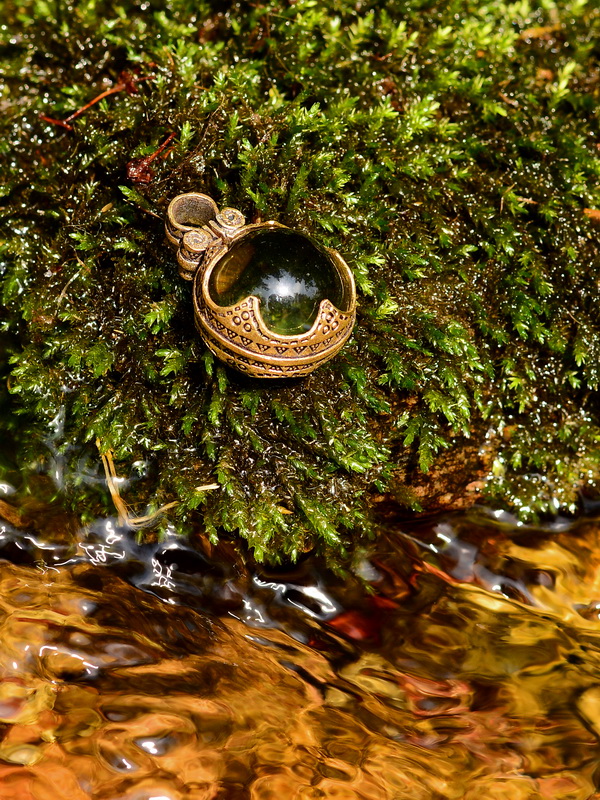
Viking Crystal Sphere
Such Viking crystal spheres were made from rock crystal and silver and have been found at several places on the isle of Gotland in Sweden.
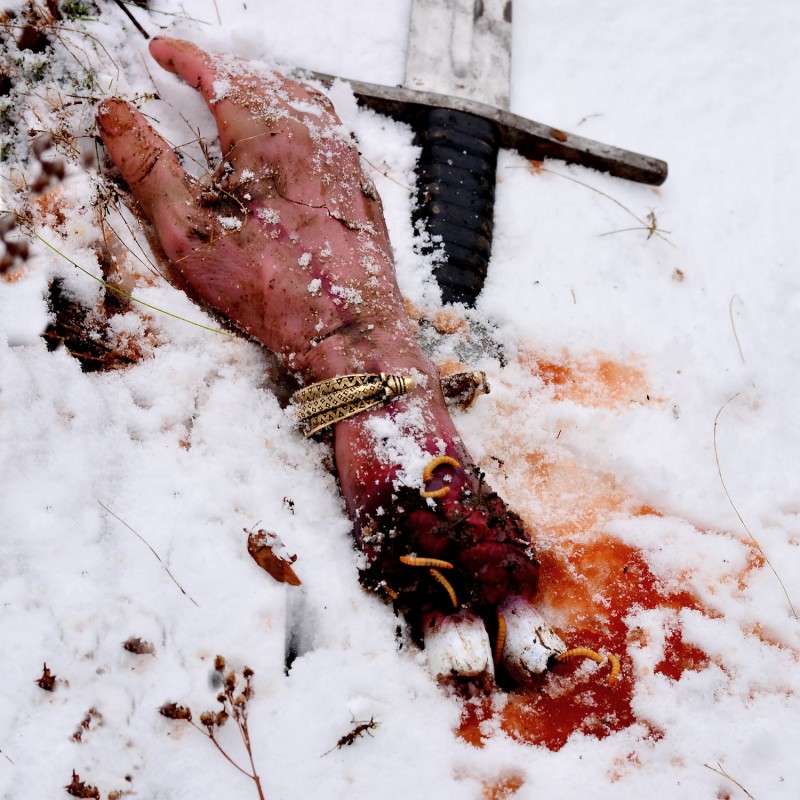
Zoomorphic Viking bangle from the Baltic
This detailed replica of a massive Viking bangle with stylized animal heads is based on a historical find from the Baltic region and dates from around 800 to 1000 AD.Bangles with punched motifs and zoomorphic animal heads were typical of the jewellery of the Baltic people during the Viking Age and are often found on the coastal strips along the Baltic. The Viking bangle is made of high-quality bronze and also available in genuine silver plated.
The Viking bangle is easy to bend and its size makes it particularly suitable for the sturdy wrist with a circumference of 19 to 24 cm. The width is 2 cm.
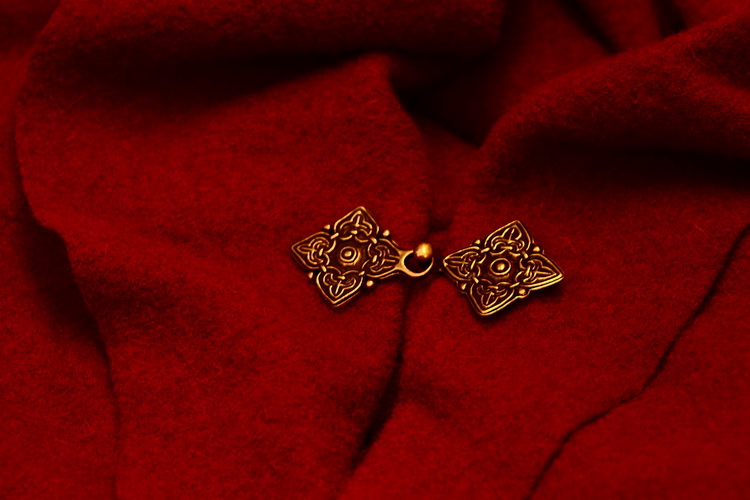
Viking caftan clasp Replica
This replica of a diamond-shaped Viking garment clasp for a caftan is made along the lines to an original find from the Ukrainian city of Chernigov, where it was found in a grave of a Rus warrior from the 10th century.
The original of this caftan clasp is now in the State Historical Museum in Moscow.
Such clasps are well known from the Varangians of the Kievan Rus, but also from the Magyar which had great influence on the garb of the Eastern Vikings.
- Große Auswahl
- Verfügbarkeitsanzeige
- Sendungsverfolgung
- Intelligente Navigation
- Freundlicher Service
- 14 Tage Widerrufsrecht
- Über 25 Jahre Erfahrung
- Schnelle Rücküberweisung
- Kulant bei Retouren
- Prof. Auftragsabwicklung